
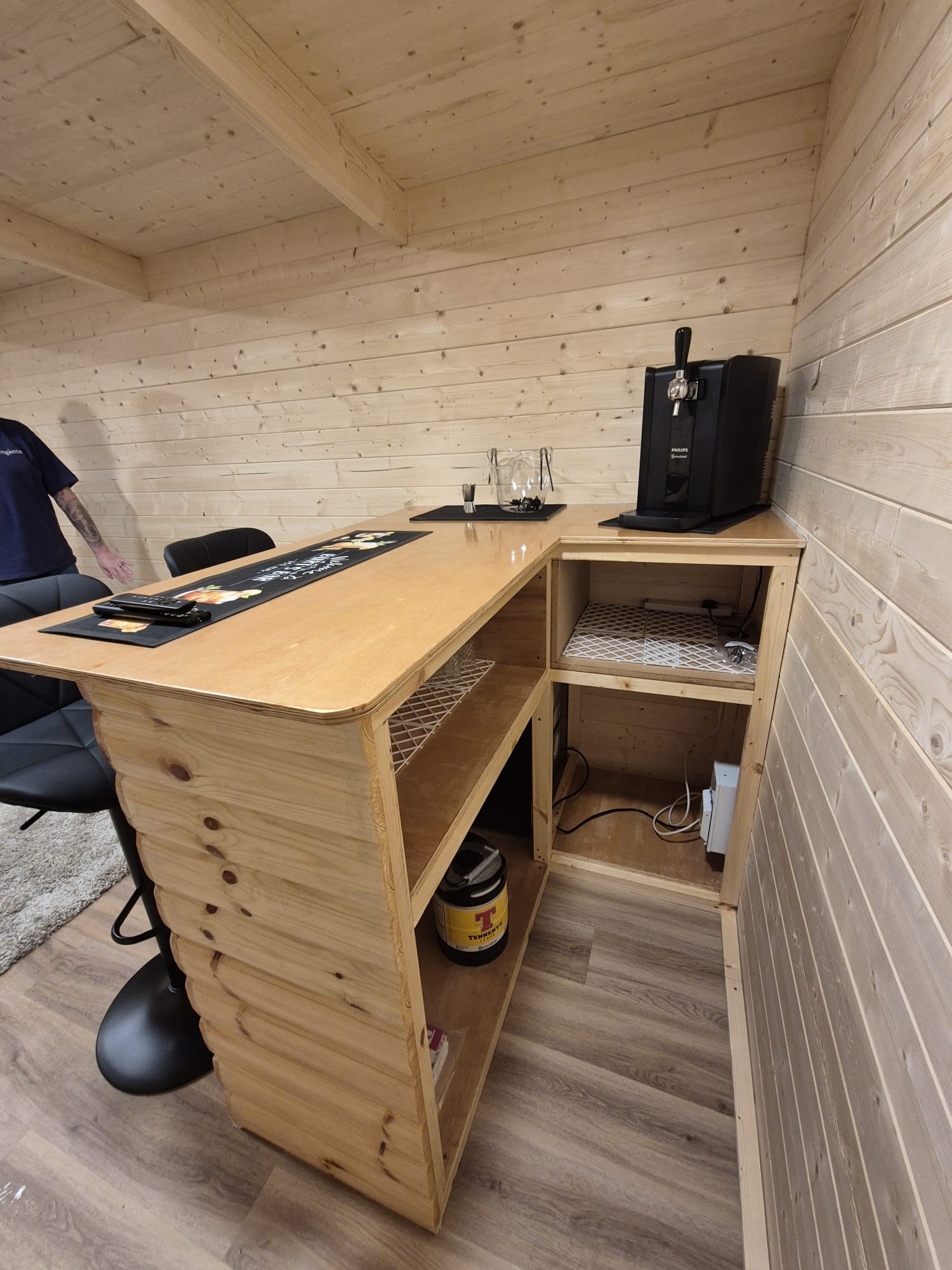
Pocket hole joinery is a method of joining two pieces of timber by drilling an angled hole into one piece, then driving a screw through that hole into the second piece. It creates a strong, hidden connection without needing glue to cure or complex hand cut joints.
It’s a fast, reliable way to build strong joints, which is why it’s a regular technique in furniture making and fitted work.
How Does Pocket Hole Joinery Work?
The process is simple in principle:
- A jig guides the drill at the correct angle into the first piece of timber
- A specially designed screw is driven through that angled hole into the second piece
- The screw pulls the two pieces tightly together, creating a strong joint
The angled hole means the screw goes in at a slant rather than straight through, which is what gives the joint its strength and holds the pieces firmly in place.
Pocket Hole Joinery vs Other Joint Types
Homeowners often ask how pocket hole joints compare to more traditional methods. Here’s a simple comparison.
| Pocket Hole Joinery | Dowel Joinery | Mortise and Tenon | |
| Speed | Fast | Moderate | Slower, more skill needed |
| Strength | Strong for most furniture and cabinetry | Good, depends on alignment | Very strong, traditional choice |
| Visibility | Hidden once assembled | Hidden | Can be visible or hidden |
| Best suited for | Furniture builds, cabinetry, fitted storage | Furniture and cabinetry | Structural and heirloom pieces |
Each method has its place. Pocket hole joinery works well for most furniture and cabinetry projects, while mortise and tenon suits pieces built to last generations with a more traditional finish.
Pros and Cons of Pocket Hole Joinery
Pros
- Quick to set up and use, which keeps project timelines shorter
- Creates a strong joint suited to most furniture and cabinetry work
- Doesn’t require specialist hand tool skills to get a solid result
- Works well for fitted storage where speed and reliability both matter
Cons
- Not always the best choice for heavy structural loads
- Screws can work loose over time if the joint is overtightened during assembly
- The pilot hole needs the right angle and depth, or the joint won’t hold as intended
- Less traditional in appearance compared to hand cut joints like mortise and tenon
Common Pocket Hole Joinery Mistakes
The most common issue we come across is getting the pilot hole angle or depth wrong. If the hole isn’t drilled at the correct angle or depth, the screw won’t pull the joint together properly, which weakens the whole connection. This is one of the easiest mistakes to make without the right setup, and one of the easiest to avoid with a bit of care and the correct jig settings.
An Example From Our Work
On a recent fitted storage project, pocket hole joinery was used to build the internal carcasses quickly and accurately, while keeping the joints hidden from view once the units were installed. Getting the pilot holes set correctly from the start meant every panel lined up cleanly, saving time during assembly and giving a solid, long lasting result.
FAQs
Is pocket hole joinery strong enough for furniture?
Yes, for most furniture and cabinetry projects, pocket hole joinery creates a strong, reliable joint. It’s not usually the first choice for heavy structural work, but it holds up well for everyday furniture and fitted storage.
Do I need special tools for pocket hole joinery?
Yes, a pocket hole jig is needed to drill the angled holes accurately, along with the correct screws designed for this type of joint.
Is pocket hole joinery as strong as mortise and tenon?
Mortise and tenon joints are generally stronger and more traditional, especially for structural or heirloom pieces. Pocket hole joinery is a faster, still strong option that suits most everyday furniture and cabinetry.
Can pocket hole joints be hidden?
Yes, once assembled, the screw and hole are hidden from view on the inside or underside of the piece, so the finished project looks clean.
Final Thoughts
Pocket hole joinery is a practical, strong way to join timber quickly, and it’s a technique we use regularly across our furniture builds. Getting the pilot hole angle and depth right from the start makes all the difference to how solid the finished joint is. Whether it’s the right choice for your project depends on what you’re building and how it needs to perform.
Thinking about a furniture build or fitted storage project? With 30 years of hands on experience across Nottinghamshire, Craig Smith Joinery uses techniques like pocket hole joinery to get strong, lasting results. Get in touch for a quote and we’ll talk through what your project needs.