
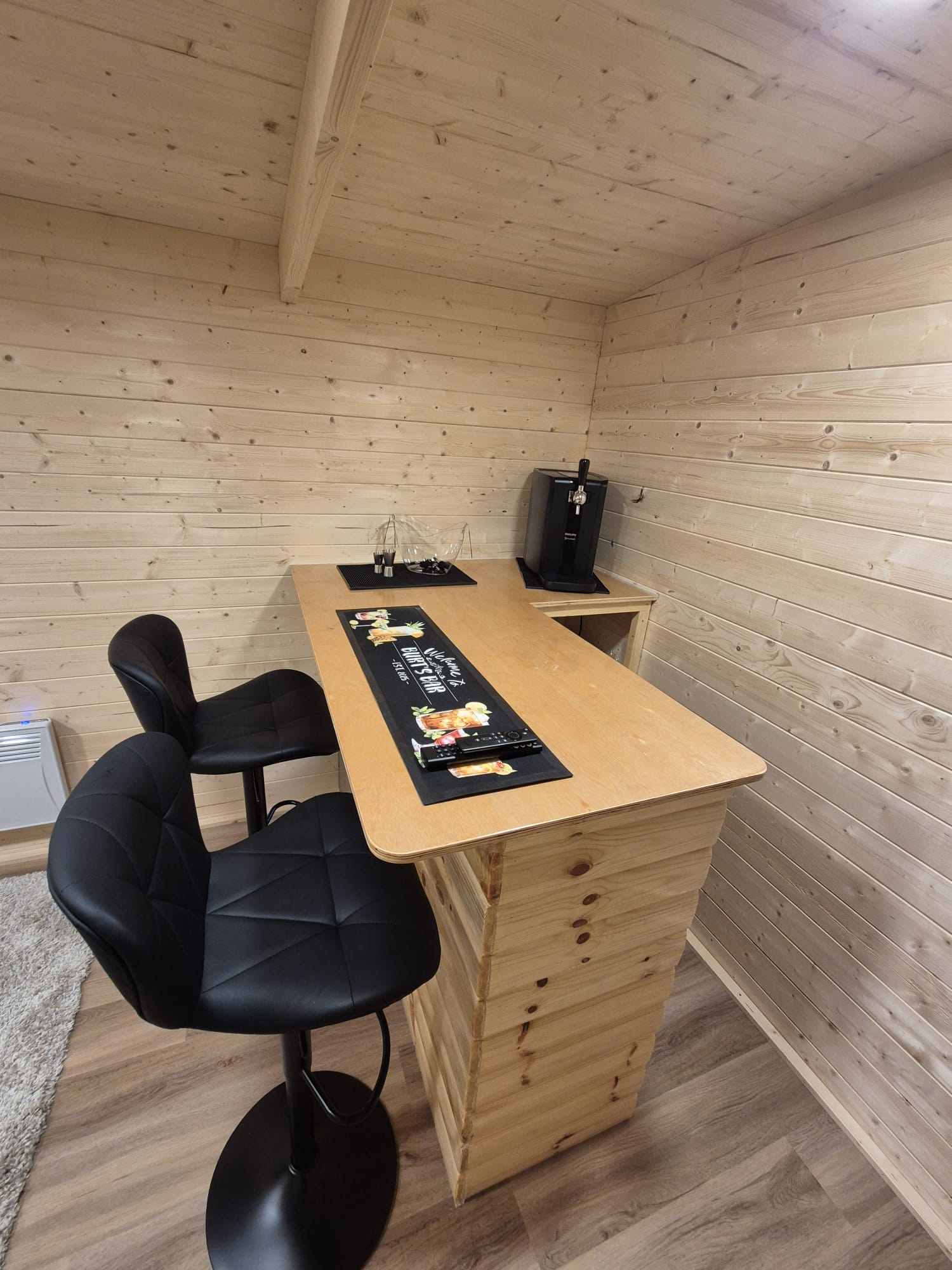
Bench joinery is the craft of building high-quality wooden items, doors, windows, cabinets, and fine furniture, at a workbench in a controlled workshop, rather than being built or assembled on-site. It’s called “bench” joinery because the work is carried out at a fixed workbench using precision tools, allowing far tighter control over accuracy, finish, and quality than is generally possible working on a building site.
At Craig Smith Joinery, bench joinery sits alongside our site and architectural work, and it comes into play across a mix of everything we build, from bespoke cabinetry through to doors, frames, and fitted storage components. This guide explains what bench joinery actually is, how it differs from site joinery, and why the skill of a trained bench joiner matters so much to the quality of a finished piece.
What Does “Bench Joinery” Actually Mean?
The term bench joinery refers specifically to joinery work carried out at a workbench, in a workshop environment, as opposed to work done directly on a building site. This might sound like a simple distinction, but it’s actually one of the most important divides in the joinery trade, because the environment a piece is built in has a huge effect on the level of precision that’s realistically achievable.
In a workshop, a bench joiner has access to a stable, flat, permanent work surface, properly set up machinery, consistent lighting, and controlled conditions free from weather, dust, and the general disruption of an active building site. This allows for a level of accuracy and fine detail that’s simply harder to achieve when working on-site, where conditions are less predictable and time pressures are often different.
It’s worth adding that this isn’t only about the physical environment. A workshop also allows a joiner to plan out a whole piece properly before cutting a single joint, laying out components, checking measurements against each other, and spotting potential problems long before assembly begins. That kind of preparation is much harder to replicate under the time pressure of an active site.
Bench Joinery vs Site Joinery: What’s the Real Difference?
It’s worth explaining this clearly, since the two terms often get used loosely, but they describe genuinely different types of work.
Site joinery, sometimes called site carpentry, involves work carried out directly at the location where the finished piece will live, fitting skirting boards, hanging doors, building staircases in place, or fixing architectural features directly into a property. This work has to adapt to the real conditions of a building, including uneven walls, existing structures, and the practical realities of working around an occupied or partially finished space.
Bench joinery, by contrast, involves building the piece itself, a door, a cabinet, a window frame, a piece of fine furniture, at a workbench in the controlled environment of a workshop, before it’s transported and fitted or installed on-site. The joints, the precision cutting, and the fine detail work all happen at the bench, away from the unpredictability of a live site.
In practice, most real joinery projects involve both. A bench joiner builds the piece to a high standard of accuracy in the workshop, and then site work is needed to actually fit or install it correctly into the building. The best results come from getting both halves right, precise bench-made components, fitted properly on-site.
It’s a useful distinction to keep in mind when discussing a quote with any joiner, since the two skill sets aren’t automatically interchangeable. A tradesperson who is excellent at fitting work on a live site doesn’t necessarily have the same fine, unhurried precision that bench work demands, and the reverse is equally true.
Why the Workshop Environment Makes Such a Difference
This is really the heart of what makes bench joinery valuable, and it comes down to a few practical realities:
- Stable, flat surfaces. A proper workbench provides a genuinely flat, stable reference surface, which is essential for cutting accurate joints. Building sites rarely offer this same level of consistency.
- Properly set up machinery. Workshop tools like table saws, planers, and biscuit or dowel joiners are set up once and calibrated for accuracy, rather than being adjusted repeatedly on different surfaces in different locations.
- Controlled conditions. Temperature, humidity, dust, and light are all far more consistent in a workshop, which matters because wood genuinely responds to these conditions, and inconsistent conditions can affect how accurately joints fit together.
- Time to get details right. Working at a bench generally allows more careful, unhurried attention to fine joinery details than site work, where other trades and deadlines often add pressure to move quickly.
None of this means site work is lower quality. Site joiners have their own specialist skills for fitting and adapting work to real buildings. It simply means bench joinery is where the finest, most precise joint-cutting work tends to happen, before the piece ever reaches site.
It’s also worth pointing out that consistency across a project depends heavily on this stability. If several cabinet doors or drawer fronts are all cut on the same calibrated machinery, in the same workshop, under the same conditions, they’ll match each other far more reliably than if each one had to be produced under slightly different circumstances on a live site.
Why the Skill of a Trained Bench Joiner Matters
A workshop environment alone doesn’t guarantee good results. It’s the combination of the right environment and a genuinely skilled bench joiner that produces work worth talking about. A trained bench joiner brings:
- An understanding of how different joints perform, and the judgement to choose the right one for each specific part of a piece, rather than defaulting to whatever’s fastest
- Precision hand skills, built up over years, that allow fine adjustments and test-fitting until a joint sits exactly right, not just “close enough”
- An eye for how wood moves, understanding that timber expands, contracts, and settles over time, and building joints that account for this rather than fighting against it
- Consistency across a whole project, ensuring that every door, drawer, or panel in a piece matches in quality and fit, not just the parts that happen to get the most attention
This is really what separates genuinely skilled bench joinery from simply “furniture that’s been put together.” The same wood, the same workshop, and even the same tools can produce very different results depending on the experience and care of the person actually doing the work.
This is also where training and years of repetition genuinely show. A newer joiner might be able to cut an individual joint accurately given enough time, but the difference with an experienced bench joiner is speed combined with consistency, producing dozens of matching, precisely fitted components without each one needing extra correction along the way.
Where Bench Joinery Fits Into Our Work
We take on bench joinery occasionally, alongside our site and architectural work, and it shows up across a genuine mix of what we build. Bespoke cabinetry and fine furniture are almost always built primarily at the bench, since the level of precision required for cabinet doors, drawers, and fitted internal components benefits enormously from a stable workshop environment.
Doors, windows, and frames often start as bench joinery too, built accurately in the workshop before being transported and fitted on-site. Components for fitted storage projects are frequently built at the bench as well, particularly the more detailed elements, before being brought together and installed in the final space.
This mix reflects how most real joinery projects actually work: the finest, most precision-dependent parts are built at the bench, while the fitting, adapting, and final installation happens on-site, where a different set of skills takes over.
A General Example: From Workbench to Finished Room
Take a typical fitted storage or cabinetry project as an example. The cabinet carcasses, doors, and drawer boxes are built at the bench, using proper joints like dowels or mortise and tenon depending on which part of the piece is being made, all cut and fitted with the precision a stable workshop environment allows.
Every joint is test-fitted, adjusted, and checked for square before final assembly, something that’s far more practical to do repeatedly at a bench than it would be working directly in a client’s home.
Once the components are built and finished to a high standard, they’re transported to the property and fitted into place, which is where site skills take over: adapting to any slight unevenness in the walls or floor, fixing components securely into the existing structure, and making sure everything lines up correctly in the real space it’s going into.
The quality of the final result depends on both stages going well, but the fine joinery precision that makes a piece feel genuinely well-made almost always traces back to the bench work.
This is often the point where clients start to appreciate why the two stages are described separately at all. A beautifully bench-made cabinet can still end up looking slightly off if the on-site fitting doesn’t account for a sloping floor or an out-of-square wall, which is why the handover between bench and site work needs just as much care as the joinery itself.
Bench Joinery vs Site Joinery: A Quick Comparison
| Feature | Bench Joinery | Site Joinery |
| Where the work happens | Workshop, at a fixed bench | On location, at the building |
| Precision achievable | Very high, controlled conditions | Good, but affected by site conditions |
| Typical focus | Cutting joints, building components | Fitting, installing, adapting to the building |
| Tools used | Calibrated workshop machinery | Portable tools, adapted to site conditions |
| Best suited to | Doors, cabinets, fine furniture, frames | Skirting, staircases in place, final fitting |
Does Bench Joinery Cost More Than Site-Built Work?
Generally, bench-built joinery reflects the time and precision involved, and this is worth understanding when comparing quotes. As a rough guide:
- Bench-built components, like cabinet doors or fine furniture pieces, often cost more per item than simpler site-built solutions, reflecting the workshop time, tool setup, and skilled hand-fitting involved
- A mix of bench and site work, which is how most real projects are built, balances precision where it matters most with practical on-site fitting for the rest, keeping overall costs reasonable
- Fully site-built work, without bench-made components, can sometimes be quicker and cheaper for simpler jobs, but generally can’t match the fine precision of properly bench-joined pieces for detailed cabinetry or furniture
Every project is different, so the best way to understand the right approach and cost for your own piece is a free quote. The number of bench-made components involved, the complexity of the on-site fitting, and the finish you want all play into the final figure.
Frequently Asked Questions
Is bench joinery better quality than site joinery?
Not necessarily “better” overall, since the two do different jobs. Bench joinery generally achieves higher precision for the actual joints and components, while site joinery brings the skill needed to fit and adapt that work correctly into a real building. Good projects need both.
Can all joinery be done at a bench?
No. Some elements, like staircases built into an existing stairwell or skirting fitted around a room’s specific dimensions, genuinely need to be finished or fully built on-site, since they depend entirely on the exact conditions of that particular building.
Why does workshop-made furniture often feel higher quality?
This usually comes down to the precision possible in a controlled workshop environment, combined with the skill of the joiner using it. Stable surfaces, properly calibrated tools, and time to test-fit joints all contribute to a noticeably higher standard of fit and finish.
Does bench joinery take longer than site work?
It depends on the piece, but bench joinery often involves more careful, unhurried attention to detail, which can mean more time invested per component, even though the overall project may move efficiently once bench-made parts are ready to install.
Is a bench joiner the same as a cabinet maker?
The terms overlap significantly. A bench joiner often builds cabinets, doors, and fine furniture components at the bench, which is very similar to what’s traditionally called cabinet making, though “bench joiner” is a broader trade term covering doors, windows, and frames as well.
Do I need to know whether my project needs bench or site joinery?
Not necessarily. A good joiner will identify which parts of your project benefit from precise bench work and which need on-site fitting, and explain that approach clearly as part of your quote.
Can a poor site fit undo good bench joinery?
Yes, to some extent. Even a precisely bench-made component needs to be fitted carefully into its actual space, accounting for any unevenness in the walls or floor. This is why the handover between bench-made work and on-site fitting matters just as much as the quality of the joinery itself.
Precision Craftsmanship, Built Right
The quality of a finished piece often comes down to the skill and care taken at the bench, long before it ever reaches your home. At Craig Smith Joinery, our bench joinery work across bespoke cabinetry, doors, frames, and fitted storage components reflects 30 years of trained hands-on skill, combined with the site experience to fit it all properly once it arrives. If you’re planning a project and want genuine craftsmanship behind it, call today for a free quote.