
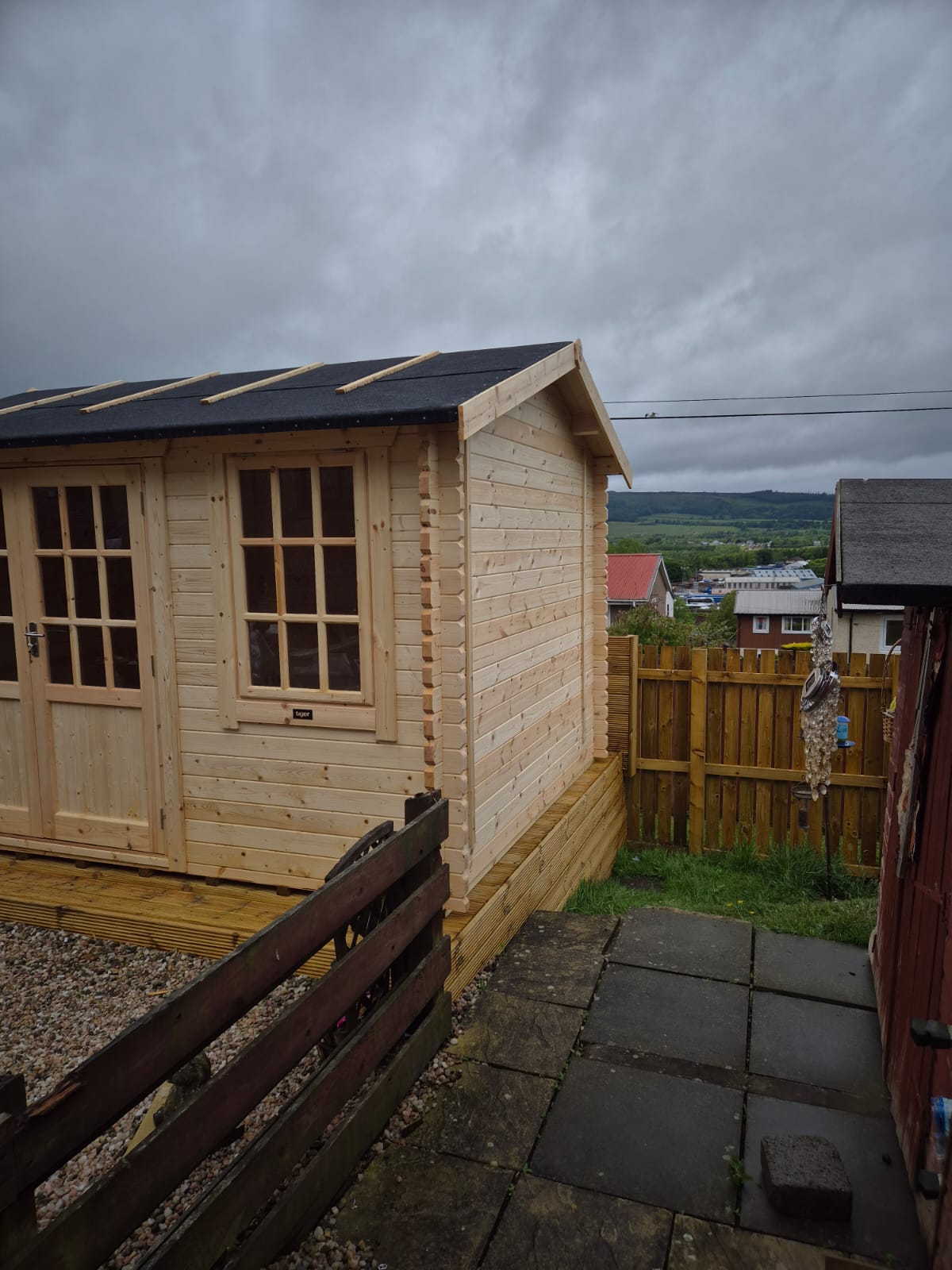
External joinery is woodwork designed and built specifically to be used outside a building, exposed to weather, temperature changes, and moisture on a daily basis. It includes things like external doors, windows, cladding, fascias, and soffits, anything made from timber that faces the elements rather than sitting safely inside a heated, sheltered home. Because of this exposure, external joinery needs different timber choices, treatments, and construction methods compared to joinery built for indoor use.
At Craig Smith Joinery, external joinery is work we take on occasionally, alongside our core internal work, covering a mix of external doors, windows, and cladding-type elements across Nottinghamshire. This guide explains what external joinery actually is, how it differs from internal joinery, and why the right approach here matters far more for long-term value than it might first appear.
What Makes Joinery “External”?
The clue is in the name: external joinery covers any wooden element built to be fitted outside a building, or in a position where it’s regularly exposed to the weather. This includes:
- External doors and door frames
- Windows and window frames
- Cladding, fascias, and soffits
- Any exposed timber structures like porches or canopies
This is quite different from internal joinery, cabinets, wardrobes, staircases, and fitted furniture, which lives inside a heated, relatively stable environment and never has to deal with rain, direct sun, or freezing temperatures.
It’s worth noting that some elements sit closer to the boundary between the two categories than others. A porch canopy, for example, is technically sheltered from direct rain in some designs, but still experiences the same temperature swings and general weathering as fully exposed timber. Understanding exactly how exposed a given piece will be is genuinely the starting point for deciding how it should be built.
Why External Joinery Needs a Different Approach
This is really the heart of what separates external joinery from everything else we build. Wood exposed to the outdoors faces a genuinely tough set of conditions that indoor furniture simply never experiences:
- Constant moisture exposure, from rain, condensation, and general damp weather, which can lead to rot if the timber and finish aren’t properly suited to the job
- Direct sunlight and UV exposure, which can fade, dry out, and degrade both the wood and any paint or finish applied to it over time
- Temperature swings, from summer heat to winter frost, causing the wood to expand and contract far more dramatically than it would indoors
- Wind and general weathering, putting ongoing physical stress on joints, frames, and fixings over the years
Internal joinery never has to withstand any of this. A wardrobe or kitchen cabinet lives in a stable, controlled environment for its entire life. An external door or window faces all of the above, every single day, for as long as it’s expected to last, which is often decades.
It’s worth pausing on just how much cumulative stress this represents. A piece of internal furniture might experience mild seasonal humidity changes inside a heated home, but an external door goes through daily wetting and drying cycles, direct sun exposure that can raise surface temperatures well above the surrounding air, and repeated freezing and thawing through the colder months.
None of these individual events is dramatic, but repeated year after year, they’re exactly what separates external joinery that lasts decades from a piece that starts failing within a handful of years.
How External Joinery Differs From Internal Joinery
It’s worth being clear about this, since the differences run deeper than just “put outside instead of inside.”
Timber choice is one of the biggest differences. Internal joinery can often use a wider range of timbers, chosen mainly for appearance, cost, and workability, since they won’t face weather exposure. External joinery generally needs timber that’s naturally more resistant to moisture and decay, or timber that’s specifically treated to cope with these conditions, since a beautiful but unsuitable timber choice outdoors can lead to rot and damage within just a few years.
Treatment and finishing matter far more for external work too. Internal furniture might simply need a decorative finish for appearance. External joinery needs a finish that actively protects against moisture, UV damage, and temperature swings, often requiring specific weatherproof paints, stains, or preservative treatments, reapplied periodically to maintain protection over the years.
Joint design and construction also has to account for more movement. Because external timber expands and contracts more significantly with weather changes than internal timber does, joints need to allow for this movement without failing, cracking, or letting moisture penetrate at weak points. This often means more robust, carefully designed joints than would be necessary for an equivalent internal piece.
Drainage and weatherproofing become genuinely important considerations too. External doors and windows need proper detailing to shed water away from vulnerable joints, rather than allowing it to pool or seep into the timber, which is a consideration that simply doesn’t exist for internal furniture.
Beyond these core differences, there’s also the question of how a piece will be inspected and maintained over its life. Internal furniture is largely a “build it and forget it” proposition, whereas external joinery genuinely benefits from occasional checks, particularly around joints, seals, and any areas where water could realistically collect.
Building this expectation into a project from the start, rather than treating maintenance as an afterthought, is part of what separates external joinery built to last from external joinery built to simply look good on installation day.
Why Long-Term Value Matters So Much for External Joinery
This is really the main point worth understanding if you’re considering external joinery for your home. Low-cost external fixtures, particularly mass-produced doors, windows, or cladding using unsuitable timber or minimal weatherproofing, often look perfectly fine when first installed.
The real difference shows up years later, when poorly suited external joinery starts showing signs of rot, warping, or paint failure, sometimes within just a handful of years, while properly built external joinery, using the right timber and finish for the job, continues performing well for decades.
This is a classic case where the upfront cost doesn’t tell the whole story. External joinery built properly the first time, with the right timber, treatment, and construction, genuinely represents better long-term value than a cheaper option that needs replacing or extensively repairing well before its time, even though the initial price tag looks more appealing.
It’s a bit like comparing two coats bought for the same winter. One might look identical to the other on the shop rail, but only one is actually built with the right materials to keep out genuine cold and wet weather over several seasons. The difference isn’t visible until the conditions actually test it, and by then, replacing the wrong choice usually costs more than simply choosing properly the first time around.
Where We Focus in External Joinery Work
While external joinery isn’t our primary specialty, when we do take it on, it covers a genuine mix, external doors and frames, windows, and cladding-type elements, always approached with the same attention to proper timber choice and construction that we apply to our core internal cabinetry and storage work.
The principle doesn’t change just because the piece is going outside: choose the right materials and joints for what the piece actually needs to survive, rather than defaulting to whatever’s quickest or cheapest.
External Joinery vs Internal Joinery: A Quick Comparison
| Feature | External Joinery | Internal Joinery |
| Weather exposure | Constant (rain, sun, temperature swings) | None, stable indoor environment |
| Timber choice | Naturally durable or treated for moisture resistance | Wider range, chosen mainly for appearance |
| Finish requirements | Weatherproof, UV resistant, needs reapplication | Decorative, less frequent maintenance |
| Joint design | Must allow for more timber movement | Less movement to account for |
| Maintenance needs | Regular checks and refinishing over the years | Minimal, mostly cleaning |
A General Example: Building an External Door the Right Way
Take a typical external door project as an example. The timber chosen needs to be naturally durable or properly treated to resist moisture and decay, since this door will face rain and sun exposure every single day for years.
The joints holding the door frame together need to be robust enough to handle ongoing expansion and contraction with the seasons, without cracking or opening up gaps that let moisture in. The finish applied isn’t just decorative. It’s a genuine weatherproofing layer, chosen specifically to resist UV fading and moisture penetration, and it needs periodic maintenance to keep protecting the timber underneath.
Compare this to an internal cabinet door, which might use a similar-looking timber and finish purely for appearance, with no real weatherproofing considerations at all. The visible result might look broadly similar at first glance, but the construction and material choices behind an external door are considerably more demanding, precisely because of what it has to survive over its lifetime.
Attention to detail at the design stage matters just as much here as the timber and finish choices themselves. Small details, like how a threshold sheds water away from the door, or how a window sill is angled to drain rather than pool, often make the difference between a piece that stays sound for decades and one that develops problems in exactly the spots where water is allowed to sit and slowly do its damage.
Does External Joinery Cost More Than Internal Joinery?
Generally, yes, and understanding why helps make sense of the price difference. As a general guide:
- Suitable external timber, chosen for natural durability or properly treated for moisture resistance, typically costs more than timber chosen purely for internal appearance
- Weatherproof finishes and treatments add cost compared to simple decorative internal finishes, both in the initial application and in the ongoing maintenance needed over the years
- More robust joint construction, designed to handle timber movement and weatherproofing, generally takes more time and skill to build correctly compared to equivalent internal joints
While external joinery costs more upfront than a low-cost alternative, the long-term value proposition is exactly where this investment pays off. Properly built external joinery avoids the repeated repair or premature replacement costs that come with cheaper, less suitable external fixtures.
Every property is different, so the best way to understand the real cost for your own external joinery is a free quote based on the specific doors, windows, or cladding you have in mind.
Frequently Asked Questions
Is external joinery always more expensive than internal joinery?
Generally yes, reflecting the more durable timber, weatherproof finishes, and robust construction needed to handle constant weather exposure. However, the long-term value is often better, since properly built external joinery avoids costly early repairs or replacement.
How often does external joinery need maintenance?
This varies by timber and finish, but external joinery typically needs periodic checks and refinishing every few years to maintain its weatherproofing, compared to internal joinery, which generally just needs occasional cleaning.
Can any timber be used for external joinery?
Not reliably. Timber needs to either be naturally durable against moisture and decay, or properly treated to cope with constant outdoor exposure. Using timber suited only to internal conditions on an external project significantly increases the risk of rot and early failure.
Why does external joinery fail faster if built cheaply?
Low-cost external joinery often uses unsuitable timber or minimal weatherproofing to keep initial costs down. This can look fine when first installed, but tends to show rot, warping, or finish failure within just a few years, well before properly built external joinery would show similar wear.
Does external joinery need different joints to internal joinery?
Often, yes. External timber expands and contracts more with weather changes than internal timber, so joints generally need to be more robust, designed to handle this movement without cracking or allowing moisture to penetrate at weak points.
Is it worth investing more in external joinery upfront?
In most cases, yes. The upfront cost difference between properly built external joinery and a low-cost alternative is often far smaller than the cost of repeated repairs or premature replacement that comes with fixtures not properly suited to constant weather exposure.
What’s the biggest warning sign that external joinery wasn’t built properly?
Early signs of paint or finish failure, particularly peeling, cracking, or discolouration within just a couple of years, are usually the first indication that either the timber, the finish, or the construction wasn’t suited to genuine outdoor exposure. Catching this early and addressing it properly can often prevent more serious rot or structural problems later on.
Built to Handle the Elements, Not Just Look Good on Day One
External joinery faces a genuinely different set of demands to anything built for indoors, and getting the timber, treatment, and construction right the first time is where the real long-term value lies.
At Craig Smith Joinery, our external doors, windows, and cladding work across Nottinghamshire are built with exactly this in mind, alongside the same fine craftsmanship we bring to all our bespoke cabinetry and fitted storage work. If you’re considering external joinery for your property, call today for a free quote.