
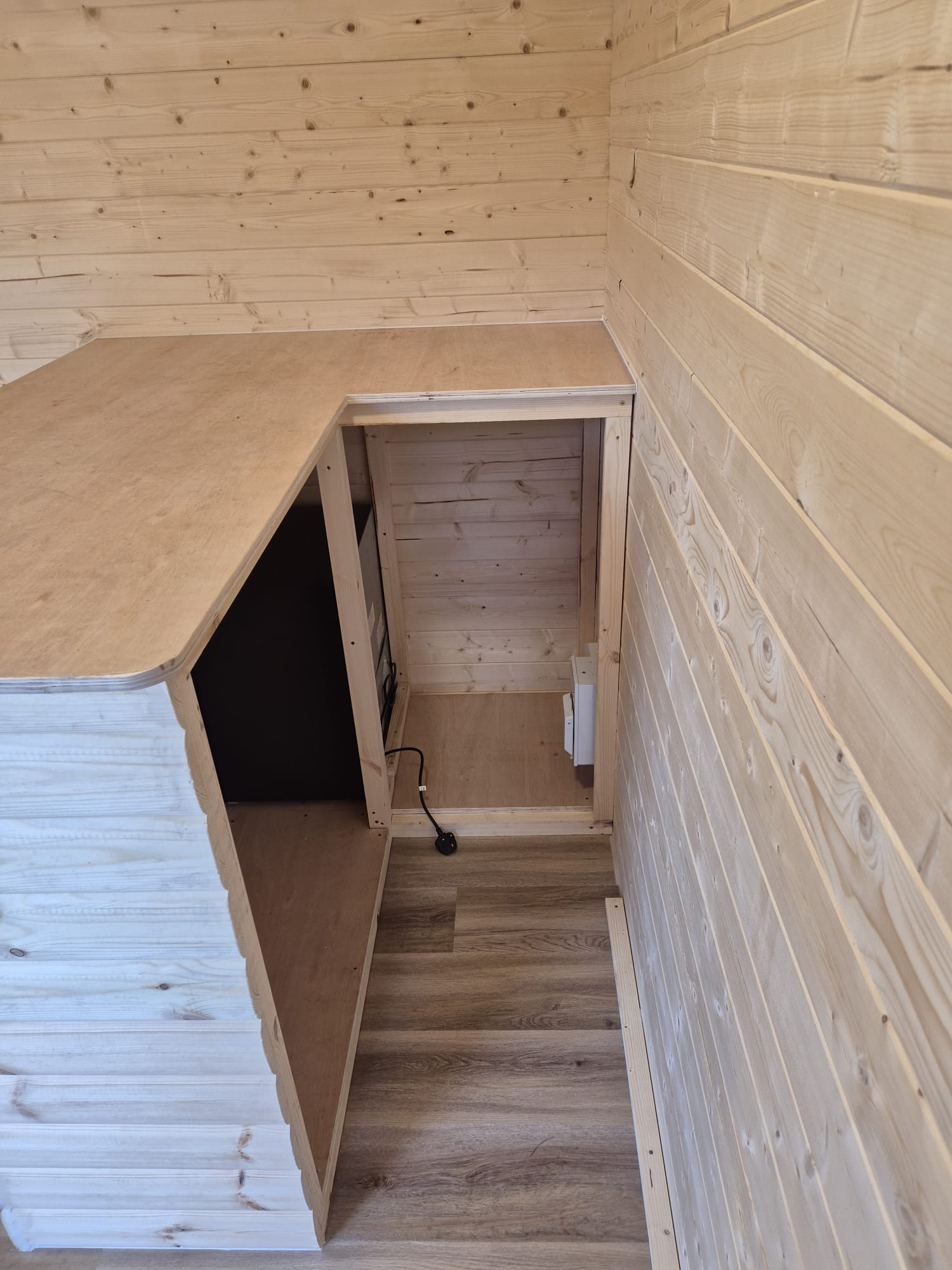
Timber joinery is the craft of building furniture, cabinets, storage, doors, and structural woodwork using wood, connected together with specific joints designed to hold under the stresses each piece will face.
The term brings together two things that both matter enormously to the final result: the timber chosen for the job, and the joinery methods used to connect the pieces together. Get either one wrong, and even a beautiful-looking piece can fail well before it should.
Whether you’re a complete beginner curious about what timber joinery actually involves, a DIYer weighing up your options, or someone about to hire a joiner for the first time, this guide covers the basics clearly, without jargon. At Craig Smith Joinery, we’ve spent 30 years matching the right timber and the right joint to the right job across Nottinghamshire, and this piece breaks down exactly what that means in practice.
What Does “Timber Joinery” Actually Mean?
At its simplest, timber joinery is any process of connecting pieces of wood together to build something that functions as one solid, reliable structure. This covers a huge range of work, from a simple shelf joined with a couple of dowels, right through to a complex staircase or a fine piece of bespoke furniture built with dozens of individual joints.
The word “timber” specifically points to the material itself, wood, as opposed to metal, plastic, or manufactured boards like MDF or plywood. Timber has properties that genuinely affect how it should be joined: it expands and contracts with temperature and humidity, it has a natural grain direction that affects its strength in different directions, and different species of timber vary considerably in hardness, durability, and how well they take different types of joints.
Understanding this properly makes a real difference to how you approach any woodworking project, whether you’re commissioning a piece or trying to understand a quote.
Timber isn’t a uniform material the way, say, steel or plastic can be. Each piece has its own grain pattern, moisture content, and quirks, which is exactly why timber joinery has developed so many different joint types over the centuries, each suited to a slightly different combination of timber behaviour and structural demand.
Why Timber Choice Matters as Much as the Joint Itself
This is one of the most overlooked parts of timber joinery for anyone new to it: the timber you choose has just as much impact on the final result as the joint used to connect it. A perfectly cut joint in the wrong timber for the job can still fail, while a well-chosen timber gives even a simple joint a much better chance of lasting.
Hardwood vs Softwood: The Basics
Timber is broadly split into two categories, and understanding the difference helps make sense of why some furniture costs more than others.
Hardwoods come from broadleaf, slower growing trees like oak, ash, walnut, and beech. They’re generally denser, more durable, and better suited to fine furniture, joints that need to hold significant weight, and pieces expected to last for generations. Hardwoods typically cost more, reflecting both the slower growth of the trees and the extra effort involved in working with denser material.
Softwoods come from faster growing conifer trees like pine, spruce, and fir. They’re generally lighter, more affordable, and easier to work with, making them popular for simpler furniture, structural framing, and projects where cost matters more than maximum durability. Softwoods can still be perfectly strong and long lasting when used appropriately, but they’re generally softer and more prone to denting or wear over time compared to hardwoods.
Neither category is universally “better.” The right choice depends on what the piece needs to do, how much wear it will face, and the budget available for the project. A well-built softwood shelf can outlast a poorly built hardwood one, since good joinery and timber choice work together rather than one compensating for the other.
It’s also worth knowing that hardwood and softwood aren’t strict indicators of appearance or colour, which is a common misconception. Some softwoods, like certain pines, can be quite pale, while some hardwoods can also be relatively light in tone. The hardwood and softwood distinction is really about the type of tree and its growth characteristics, not how the finished timber looks or feels to the touch.
The Main Types of Timber Joints
Once the right timber is chosen, the next question is which joint suits the job. A handful of joints come up again and again across most furniture, cabinets, and storage projects.
Dowel Joints
A dowel joint connects two boards using small round wooden pegs, glued into matching drilled holes. It’s a reliable, cost effective choice commonly used for cabinet carcasses and shelving, and when made with accurately aligned holes and good glue coverage, it’s strong enough for the vast majority of everyday furniture.
Biscuit Joints
A biscuit joint uses small oval shaped wooden discs, glued into curved slots cut into each board. It’s particularly good at keeping panels perfectly aligned while glue sets, making it a common choice for wardrobe sides, tabletops, and cabinet panels, and it’s quicker to make than many alternatives, which helps keep costs reasonable on larger projects.
Mortise and Tenon Joints
A mortise and tenon joint is one of the strongest and most established joints in timber joinery. One piece has a slot cut into it, the mortise, and the other has a matching tongue shaped to fit, the tenon, glued or pegged into place. This joint handles twisting and pulling forces particularly well, which is why it’s the standard choice for chairs, tables, door frames, and anything load bearing or frequently stressed.
Beyond these three, there are naturally many other joints suited to specific situations, from dovetails for drawers to interlocking Japanese-style joints for feature pieces. But dowels, biscuits, and mortise and tenon cover the vast majority of everyday furniture, cabinet, and storage work, which is why they’re worth understanding first if you’re new to the topic.
A Quick Comparison of Timber and Joint Choices
| Consideration | Hardwood | Softwood |
| Durability | Very high | Good, with proper use and finish |
| Cost | Higher | More affordable |
| Best suited to | Fine furniture, heavy-use pieces | Simpler furniture, structural framing |
| Joint Type | Strength | Speed to Make | Typical Use |
| Dowel joint | Good | Medium | Cabinet carcasses, shelving |
| Biscuit joint | Good | Fast | Panels, tabletops, wardrobe sides |
| Mortise and tenon | Excellent | Slow | Frames, chairs, load-bearing furniture |
Reading these two tables together is really the point of this whole guide. Timber choice and joint choice aren’t independent decisions made in isolation; they work together to determine how a finished piece will perform. A hardwood combined with a fast, simple joint might be overkill for a low-stress application, while a softwood paired with a demanding joint might not deliver the durability the piece actually needs. The best results come from thinking about both decisions together, rather than picking one and treating the other as an afterthought.
How Timber Joinery Differs From Other Materials
It’s worth understanding how timber joinery compares to joining other common materials, since this helps explain why wood needs its own careful approach.
Manufactured boards like MDF or plywood are more uniform than solid timber, since they’re manufactured rather than grown, which makes them more predictable to work with in some ways, but they generally don’t take traditional joints like mortise and tenon as well, since they lack the natural grain strength of solid timber. They’re often better suited to simpler joints and are commonly used where cost matters more than long term durability or repairability.
Metal, such as aluminium used in some window and door frames, behaves completely differently to timber. It doesn’t expand and contract with humidity the way wood does, and it can’t be joined using traditional wood joints at all, relying instead on welding, fixings, or specialist metal joining techniques.
Timber’s natural properties, its grain, its ability to be shaped and interlocked, and its gradual, predictable movement with humidity, are exactly what allow the wide range of joints covered in this guide to work as well as they do, which is part of why timber remains such a popular choice for furniture and joinery despite modern alternatives being available.
There’s also something worth noting about repairability here. Solid timber, joined properly, can often be repaired, adjusted, or even partially rebuilt decades after it was first made, since the material and the joints are both genuinely workable with hand tools.
Manufactured boards and metal frames are frequently more difficult to repair in the same piecemeal way, which is one of the quieter, long term advantages solid timber joinery offers over some modern alternatives.
How to Think About Choosing the Right Timber and Joint
This is really the main takeaway worth remembering from this whole guide: there’s no single “correct” timber or joint for every project. The right combination always depends on what the finished piece actually needs to do.
A few practical questions help guide this decision on any project:
- How much weight or stress will this piece carry? Heavier use generally calls for a hardwood and a stronger joint like mortise and tenon.
- Will it be seen or hidden? Some timbers and joints are chosen partly for their appearance, particularly on visible surfaces or feature pieces.
- What’s a reasonable budget for this project? Softwoods and faster joints like biscuits or dowels can deliver excellent results at a more accessible cost, provided they’re matched sensibly to the job.
- How long does this piece need to last? Furniture expected to last generations generally benefits from hardwood and stronger joints, while simpler, shorter term pieces can reasonably use more affordable options.
These questions are worth asking honestly at the start of any project, since the answers genuinely shape which combination of timber and joint makes sense. A piece intended as a temporary solution for a rented property, for example, doesn’t need the same investment in hardwood and mortise and tenon joints as a family heirloom piece meant to be handed down for generations.
Does Timber and Joint Choice Affect Cost?
Yes, significantly, and understanding this helps make sense of quotes when comparing options. As a general guide:
- Softwood combined with faster joints like biscuits or dowels generally represents the most affordable overall approach, well suited to everyday furniture and storage
- Hardwood combined with stronger joints like mortise and tenon sits at a higher cost, reflecting both the timber itself and the additional time needed to cut these joints accurately
- Mixed approaches, using hardwood or stronger joints only where genuinely needed, and more affordable options elsewhere, often provide the best balance of cost and long term durability
Every project is different, so the best way to understand the right combination, and the real cost, for your own piece is a free quote. Discussing your budget and expectations openly with a joiner at the outset generally leads to a far more sensible combination of timber and joints than assuming one single approach must apply to the entire piece.
Frequently Asked Questions
What’s the difference between timber joinery and carpentry?
The terms overlap considerably, but joinery generally refers to more detailed, precision built woodwork like furniture, cabinets, and fitted joints, often built partly in a workshop, while carpentry can cover a broader range of on-site construction and structural work.
Is hardwood always better than softwood for joinery?
Not necessarily “better.” It depends on the job. Hardwood generally offers greater durability and is better suited to heavy use or fine furniture, but softwood, used appropriately with the right joints, performs perfectly well for many everyday projects at a more accessible cost.
What’s the strongest type of timber joint?
Mortise and tenon joints are generally considered among the strongest common joints, since they resist twisting and pulling forces particularly well, making them the standard choice for chairs, tables, and load bearing frames.
Can different timbers be used within the same project?
Yes, and it’s actually common practice. A project might use hardwood for visible, heavy-use surfaces, and a more affordable softwood or manufactured board for hidden structural elements, balancing cost and durability across the piece.
Does timber joinery always use glue?
Not always. While many common joints like dowels and biscuits rely on glue, some traditional joints, particularly in structural or Japanese-style joinery, are designed to hold purely through the precision of the interlocking shape itself, without any glue or fixings at all.
How do I know if a piece of furniture uses good timber joinery?
It’s not always visible from the outside, since much of the joinery is hidden once a piece is finished. Asking a joiner directly what timber and joints they plan to use, and why, is one of the simplest ways to understand the quality behind a quote.
Can I mix timber types purely for budget reasons without sacrificing quality?
Yes, this is a genuinely sensible approach in many projects. Using hardwood on visible, higher stress areas and a more affordable timber elsewhere can keep costs reasonable without compromising the overall strength or appearance of the finished piece, provided the choices are made thoughtfully rather than simply cutting costs everywhere.
Get Timber Joinery Matched to Your Project
Understanding the basics of timber joinery makes it much easier to have a genuinely useful conversation with any joiner you’re considering, and to know exactly what you’re paying for.
At Craig Smith Joinery, every project we take on across Nottinghamshire, from bespoke cabinetry to fitted storage and custom joinery, uses the timber and joint that genuinely suit each part of the build. If you’re planning a piece and want it matched properly the first time, call today for a free quote.